
Living room furniture: Checklist, dimensions and buying guide
Living room furniture: checklist, dimensions and buying guide
Sofa, coffee table, armchair, TV stand, shelving unit and lighting – many pieces of furniture come together in the living room, which not only need to look good but also have to match each other. When buying living room furniture, you may have questions such as: How large can the sofa be? How high should the coffee table be? How much space do you need from the TV? And what furniture do you actually need?
This guide answers exactly these questions. It is deliberately designed as a buying guide: with a checklist of all living room furniture, the most important dimensions and distances in tables, information on materials and quality, as well as an FAQ. You can read about how to arrange the furniture in the room in the guide Furnishing the living room, and you can find style inspiration under Living room ideas.
Checklist: This living room furniture you need
| Furniture piece | Priority | Function | Tip |
|---|---|---|---|
| Sofa | Must | Sitting, lying down, guests | Buy first, everything else is based on it |
| Coffee table | Must | Surface, focal point | 2/3 of the sofa length |
| Armchair | Recommended | Additional seat, reading nook | Same seat height as sofa |
| Side table | Recommended | Surface next to armchair/sofa | Height = armrest ± 5 cm |
| TV stand / Lowboard | Depending on use | Media, storage space | Slightly wider than the TV |
| Shelving unit / Sideboard | Recommended | Books, decor, storage space | Mount to wall |
| Pouf / Stool | Optional | Footrest, extra seat | Flexible to rearrange |
| Rug | Recommended | Zoning, acoustics | Front legs of the furniture on it |
| Lamps | Must | General, reading, mood lighting | At least 3 light sources |
Always start with the sofa. It is the largest and most expensive piece of furniture and determines the proportions, colors, and style. The coffee table, armchair, and rug are then chosen to match the sofa.


The sofa: Size and shape
Before buying, measure not only the wall, but also the doors, stairwell, and elevator. As a rule of thumb, the sofa should take up at most two-thirds of the wall length, so that there is space on the left and right for a side table, lamp, or plant. Allow 60–70 cm in width per seat. The seat depth determines the comfort: 50–55 cm for upright sitting, 60–65 cm for lounging with pillows.
| Sofa type | Width | Seats | Minimum space |
|---|---|---|---|
| 2-seater | 150–180 cm | 2 | approx. 12 m² |
| 3-seater | 190–230 cm | 3 | approx. 15 m² |
| Corner sofa | 230–300 cm | 4–5 | approx. 20 m² |
| Modular sofa | variable | variable | flexible |
A classic 3-seater STUTTGART (1860 €) fits into most living rooms, a 2-seater sofa SENI (1890 €) is ideal for smaller rooms, and a modular sofa TUCUNA (1890 €) can be reconfigured depending on the room and living situation. You can find all models in the Sofas collection.
The coffee table: Height, size and distance
The coffee table should be approximately two-thirds the length of the sofa and at seat height or up to 5 cm below it. Leave 40–50 cm between the edge of the sofa and the table so that you can comfortably stretch your legs while still being able to set down a glass. Round tables are suitable in front of corner sofas and in rooms with a lot of through traffic. A rectangular coffee table SENA (1050 €) made of solid oak fits in front of a 3-seater, a square coffee table UVER (940 €) in front of a corner sofa or between two armchairs. You can read in the guide Wooden coffee table which types of wood, shapes, and dimensions are suitable for your room.
| Dimension | Recommendation |
|---|---|
| Coffee table height | Sofa seat height minus 0–5 cm (usually 38–46 cm) |
| Length | approx. 2/3 of the sofa length |
| Distance to the sofa | 40–50 cm |
| Side table height | Armrest height ± 5 cm (usually 50–60 cm) |
You can find more models under Living room tables. In addition to the armchair, a small round side table PRAGUE (680 €) complements the seating group.


Armchair: More seats and a reading nook
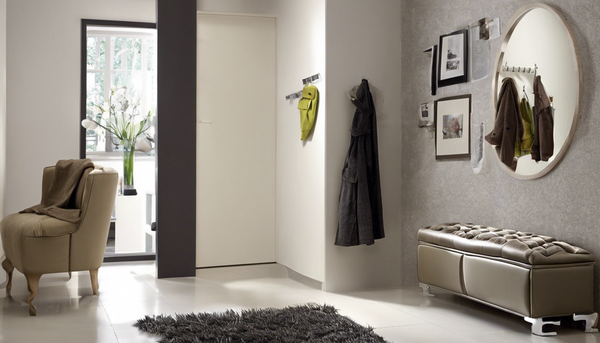
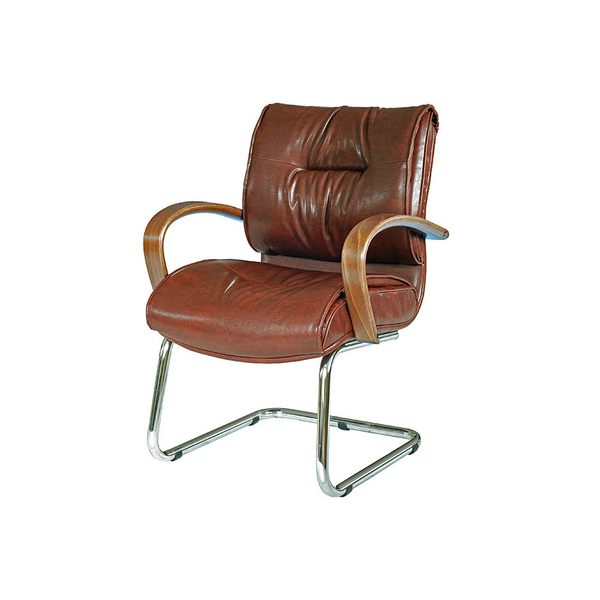
Armchairs complement the sofa and make the seating group sociable. They should have approximately the same seat height as the sofa so that conversations can take place at eye level. Two identical armchairs opposite the sofa look classic and symmetrical, while a single armchair at an angle to the sofa looks relaxed and modern. A reading nook needs an armchair with a high backrest, a floor lamp, and a side table. A reading armchair DANTE (690 €) offers plenty of comfort in a small space, while a BOSCO armchair (990 €) made of buffalo leather becomes an eye-catcher. You can find more models in the Armchairs collection.


Distances and walkways in the living room
| Distance | Minimum | Comfortable |
|---|---|---|
| Sofa ↔ Coffee table | 35 cm | 45–50 cm |
| Walkway | 60 cm | 80–90 cm |
| Sofa ↔ Armchair (conversation) | – | max. 2.5 m between people sitting |
| TV ↔ Sofa (4K) | 1.2 × screen diagonal | 1.5 × screen diagonal |
| Rug ↔ Wall | 20 cm | 30–45 cm |
A 55-inch TV (140 cm diagonal) requires a distance of approximately 1.7–2.1 m from the sofa at 4K resolution, and a 65-inch device (165 cm) approximately 2.0–2.5 m. The center of the screen should be approximately at eye level when sitting, so at 100–110 cm. Avoid mounting the TV above a fireplace or too high on the wall, because a constantly tilted-up head strains the neck. Windows should be to the side of the screen so that no reflections occur.

Storage: Shelving units, sideboards and TV stands
Storage determines whether the living room looks tidy. A lowboard under the TV should be slightly wider than the device, while a sideboard offers space for dishes, games, and documents. Open shelving units like the OLGA shelving unit (€1,090) are suitable for books and decorations, but only look calm when they are not overcrowded. Combine open compartments with boxes or closed elements. Tall shelves should always be secured to the wall.

Materials and Care
| Material | Advantages | Disadvantages | Ideal for |
|---|---|---|---|
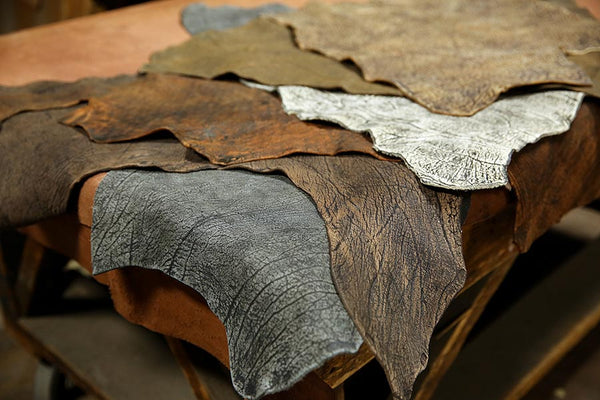
| Buffalo leather | Very durable, develops an elegant patina | Higher price | Sofas, armchairs |
| Fabric / woven fabric | Wide range of colors, warm | More sensitive to stains | Sofas, armchairs |
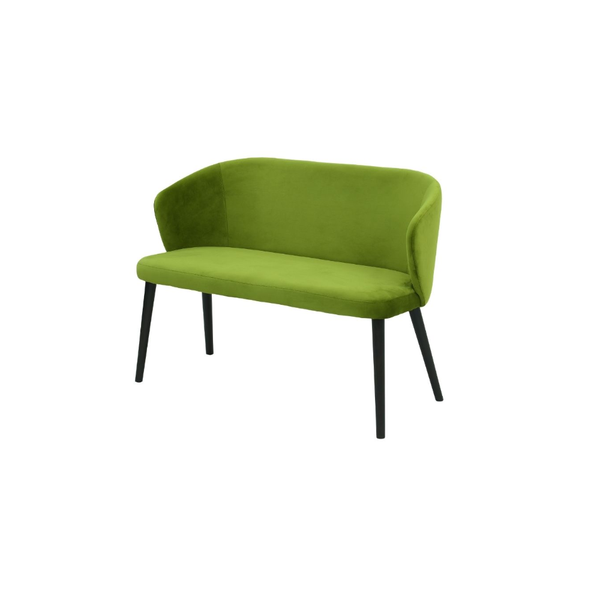
| Velvet | Luxurious, intense colors | Prone to crushing | Accent chairs, poufs |
| Bouclé | Soft, trendy | Pets can pull out threads | Armchairs |
| Solid oak | Robust, timeless | Heavy | Coffee tables, shelving units |
| Metal | Slim, stable | Cool appearance | Frames, side tables |
In households with children and pets, leather and durable, wipe-clean fabrics have proven their worth. Velvet and light woven fabrics are beautiful but require more care.

Style: Combining living room furniture harmoniously
Living room furniture does not have to come from the same collection. A mix with a common denominator looks more interesting: two to three wood tones, one metal color, and a color palette of three main colors. A large, understated sofa can handle a striking armchair, while a distinctive coffee table needs a simple sofa. A TOR pouf (€780) in an accent color ties the sofa, armchair, and rug together.

Living room furniture for small spaces
In small living rooms under 15 m², proportions and lightness are key. Furniture with visible legs lets the floor show through and looks airier than models that sit directly on the floor. A 2-seater with narrow armrests offers almost as much seating area as a large 3-seater with wide armrests. Two small round tables can be used flexibly instead of one large coffee table. A pouf replaces the second armchair and also serves as a footrest and surface. Light upholstery, a large mirror, and shelving units that go up to the ceiling make the room appear larger.
- Sofas with legs: At least 10–15 cm of clearance from the floor creates an airy feel.
- Narrow armrests: More seating area for the same width.
- Multifunctional furniture: Pouf with storage, side table as a stool.
- Round shapes: Make it easier to move around in narrow spaces.
- Plan vertically: Wall shelves instead of wide chests of drawers.

Living room furniture for large and open spaces
In large or open living spaces, the risk is different: furniture stands lost against the walls, and the room feels empty. Move the seating group away from the walls into the center of the room and define it with a large rug. The back of the sofa can face the dining area, acting as a natural room divider. A corner sofa or modular sofa creates a self-contained conversation area, while two armchairs on the opposite side complete it. In very large rooms, a second zone is worth creating, such as a reading nook by the window or a small workspace.

Distribute your budget wisely
Not every piece of furniture needs to cost the same. Invest where you sit every day and where quality is noticeable: in the sofa and your favorite armchair. A high-quality sofa made of leather or with good padding will last 15 years or more, while a cheap model often lasts only a few years. Solid wood is worth it for a coffee table because it withstands scratches and can be refinished. You can save on decorations, cushions, and side tables and replace them later if your taste changes.
| Piece of furniture | Share of the budget | Reason |
|---|---|---|
| Sofa | 40–50 % | Daily use, comfort, durability |
| Armchair | 15–20 % | Second seating area, character piece |
| Coffee and side tables | 10–15 % | Solid wood lasts a long time |
| Storage / TV furniture | 10–15 % | Order and structure |
| Rug, lamps, decorations | 10–15 % | Easy to replace |

Common mistakes
Sofa too large
The room feels cramped, and walkways are missing.
Coffee table too small
It looks lost, and nothing is within reach.
Rug too small
The furniture appears to be floating, and the zone feels disjointed.
Overhead lighting only
Uninviting, flat atmosphere.
Frequently asked questions about living room furniture
What furniture belongs in the living room?
A sofa, coffee table, lamps, and usually an armchair, side table, shelving unit or sideboard, TV furniture, and rug.
How large should the sofa be in relation to the room?
At most two-thirds of the wall length; 60–70 cm in width per seat.
How high should a coffee table be?
Approximately at sofa seat height or up to 5 cm below it, usually 38–46 cm.
How much space should be between the sofa and coffee table?
40–50 cm is ideal.
Which sofa material is the most durable?
Buffalo leather and durable, tightly woven fabrics.
Which living room furniture is suitable for small spaces?
Sofas with visible legs and narrow armrests, round coffee tables, poufs instead of a second armchair, and wall shelves that go up rather than across.
How much should you spend on the sofa?
Around 40–50 % of the furniture budget, because the sofa is used every day and a high-quality model will last 15 years or more.
In what order do you buy living room furniture?
First the sofa, then the rug and coffee table, followed by the armchair, storage, and lamps.
Living room furniture at derStuhl
Sofas, armchairs, and coffee tables made of leather, fabric, and solid wood.