
Cantilever Chairs: Comfort, Dimensions & the Best Models
Cantilever Chair: How It Flexes, Which Dimensions Are Right, and Which Models Are Worth It
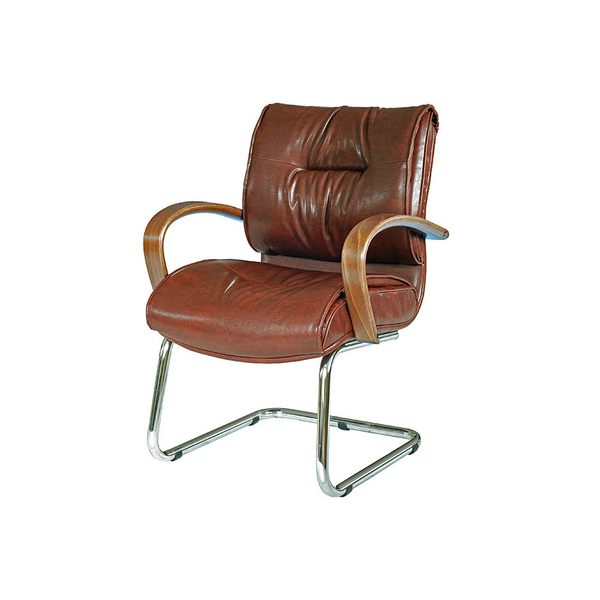
A cantilever chair has no back legs. The seat and backrest rest on a single, curved frame made of steel tubing or flat steel, which gives slightly when you sit down. This gentle flexing has made the cantilever chair one of the most popular chairs for dining tables, home offices, and living rooms for around a hundred years. In Austria and Germany, it is searched for under two names: as a cantilever chair and as a rocking chair. The same principle is meant.
This guide is not about design history, but about practical use: How does the suspension work, which seat height is right for which table, how much space does a cantilever chair need, how much weight can it support, how do you protect parquet and tiles, and when is a model with armrests the better choice? At the end, we compare cantilever chairs from our range with actual dimensions and prices.
The Most Important Things in Brief
- Principle: A cantilever chair stands on a continuous sled base without back legs. The metal bends elastically under load and springs back.
- Comfort: The slight movement provides active, relaxed sitting. Many find this more comfortable than a rigid four-legged chair during long dinners and in the home office.
- Dimensions: Our cantilever chairs have a seat height of 51 to 52 cm, a width of 50 to 57 cm, and a depth of 63 cm. They fit dining tables with a height of 75 to 80 cm.
- Load capacity: According to the product page, our models support up to 130 kg. Always rely on the specifications of the respective manufacturer.
- Floor: Sled bases lie flat. With suitable felt or plastic glides, parquet, vinyl, and tiles remain protected.
- Armrests: With armrests, you sit more comfortably and stand up more easily, but you need around 7 cm more width and a sufficiently high table underside.
What Is a Cantilever Chair, and How Does the Suspension Work?
In a classic chair, four legs carry the weight vertically into the floor. In a cantilever chair, this is done by a U- or S-shaped curved frame: Two sled bases lie on the floor, run forward, bend upward, and support the seat from the front. There is no support behind the seat. Technically, this is called a cantilever construction, or cantilever chair in English.
When you sit down, the front arch bends by a few millimeters to about two centimeters. When you lean back, the backrest also gives slightly. Because steel works in the elastic range, the frame returns to its original shape afterward, thousands of times a day, over many years. How much a cantilever chair flexes depends on three things: the material and profile of the frame, the radius of the bend, and the weight of the person sitting.
| Component | Function | What to Look For |
|---|---|---|
| Sled bases | Lie on the floor and distribute the weight | Long, straight sled bases stand more steadily. Glides must sit properly. |
| Front arch | The "spring joint" of the chair | Uniform bend without kinks, clean welded or plug connections |
| Seat support | Connects the frame and seat cushion | Firmly bolted, no play and no creaking when sitting down |
| Backrest support | Holds the backrest, flexes slightly with it | Stable enough so that the backrest does not wobble when leaning back |
| Surface | Protects the metal from scratches and rust | Powder coating or chrome plating, uniform and without bubbles |
Round tubing looks light and classic and usually flexes a bit more softly. Flat steel or square tubing looks more graphic and modern and is often a bit stiffer. Most of our cantilever chairs are made of powder-coated metal; you choose the frame color on the product page. We explain how this coating is created in the post Electrostatic-Painted Metal.
Are Cantilever Chairs Comfortable? What the Flexing Really Brings
Cantilever chairs are considered particularly comfortable, and there is a comprehensible reason: The frame gives slightly to every shift in weight. You do not sit rigidly, but are slightly in motion. Ergonomists speak of dynamic sitting because the muscles in the back make small compensatory movements. A cantilever chair is not a miracle cure for back pain, but it makes sitting for a long time noticeably more relaxed.
Long Dinners
Those who like to sit at the table for two or three hours benefit the most from the flexing. A well-padded seat and a high backrest are more important here than a particularly slim frame.
Home Office at the Dining Table
For a few hours of laptop work, a cantilever chair is more comfortable than a hard wooden chair. For a full workday, we still recommend a real office chair, see ergonomic chairs.
Older People
Cantilever chairs with armrests make sitting down and standing up easier because you can brace yourself. The flexing is usually perceived as pleasant, not wobbly.
In addition to the frame, seat depth and padding are important for comfort. A seat depth of about 45 to 50 cm fits most adults. The seat should not be so deep that the knees hit the front edge. Padding with firm foam filling retains its shape longer than very soft cushions. Those who sit on a cantilever chair for the first time will clearly notice the flexing; after a few days, you hardly consciously perceive it anymore.
Cantilever Chair Dimensions: Seat Height, Width, Depth, and Space Requirements
For a cantilever chair to be comfortable at the table, four dimensions must be right: seat height, seat width, overall depth, and, for models with armrests, armrest height. The following table shows common values in the trade and the dimensions of our FLEET and BADSAAL cantilever chairs according to the product data.
| Dimension | Common Range | Our FLEET/BADSAAL Models | What It Means |
|---|---|---|---|
| Overall Height | 78–95 cm | 85–87 cm | High backrest supports more of the back |
| Seat Height | 45–52 cm | 51–52 cm | Fits higher dining tables with 75–80 cm |
| Width Without Armrests | 44–52 cm | 50 cm | More chairs per table side |
| Width With Armrests | 54–62 cm | 56–57 cm | More comfortable, needs more space |
| Overall Depth | 55–65 cm | 63 cm | Sled bases extend backward, plan for space |
| Armrest Height | 62–68 cm | 65 cm | Must fit under the tabletop or apron |
Seat Height and Table Height: There should be about 25 to 30 cm between the seat and the tabletop so that the thighs are free and the forearms rest comfortably on the table. With a cantilever chair, it is also important that the padding and frame give slightly under load. The actual seat height is therefore usually one to two centimeters lower in everyday use than in the data sheet.
| Table Height | Recommended Seat Height | Suitable Cantilever Chairs |
|---|---|---|
| 72 cm (older or lower tables) | 42–47 cm | Models with lower seat height, measure carefully beforehand |
| 75 cm (standard in AT and DE) | 45–50 cm | For the linked FLEET SHANGHAI with armrests: 51 cm according to the product page; sinking not stated as a general rule |
| 76–78 cm | 47–52 cm | FLEET OHIO, FLEET ENVELOPE, FLEET NA with 52 cm |
| 80 cm | 50–55 cm | FLEET models with 52 cm, suitable for 75–80 cm according to the manufacturer |
Space Requirements: At the dining table, allow about 60 cm of table length per person, and for cantilever chairs with armrests, rather 65 cm. Because the sled bases extend backward, a cantilever chair needs a bit more depth than some four-legged chairs. Between the chair and the wall, 75 to 90 cm should remain free so that you can stand up comfortably. How to calculate the right table size is shown in our post Dimensions for Your Dining Table.
How Much Weight Can a Cantilever Chair Support?
Because the frame is constantly subjected to bending, the load capacity of the cantilever chair is a more important purchasing criterion than for the four-legged chair. Standard dining chairs are designed for about 100 to 150 kg. According to the product page, our cantilever chairs support up to 130 kg and are intended for indoor use without moisture. For people who regularly reach this limit, it is worth asking a question before ordering.
| Criterion | Good Sign | Warning Signal |
|---|---|---|
| Manufacturer Specification | Specific value in kg, e.g. "up to 130 kg" | No specification or only "stable" |
| Frame Profile | Solid flat steel or thick-walled tube | Very thin tube that can be bent by hand |
| Connections | Clean welded seams, secured screws | Visible gaps, loose screws after a short time |
| Test Standards | Specification of tested seating furniture standard (e.g. EN 12520 for the residential area) | No information about testing |
- Sit in the middle: Do not drop down onto the front edge with momentum. This puts the greatest strain on the arch.
- Do not step on it: A cantilever chair is not a ladder. The suspension makes it unsuitable for this.
- Do not rock sideways: The frame is designed for load from above and behind, not for lever forces to the side.
- Check the screws: Check the connection of the seat and frame once or twice a year and tighten them if necessary.
Cantilever Chair With or Without Armrests?
The question "Cantilever chair with armrests or without?" is one of the most frequent search queries around the rocking chair in Austria and Germany. There is no blanket answer, it depends on the table, room, and use. Both variants cost the same with us. The difference is therefore only in comfort and space.
| Criterion | With Armrests | Without Armrests |
|---|