
Ergonomic Chair for Dining Table & Home Office: What Matters
Ergonomic chair for the dining table & home office: what matters
When people talk about an ergonomic chair, most immediately think of an office chair with castors, levers and a mesh back. In everyday life, however, we spend a surprising amount of time on perfectly normal chairs: during a long weekend breakfast, at dinner with friends, doing homework at the kitchen table and, more and more often, working on a laptop at the dining table. It is precisely there that it is decided whether your back stays relaxed after two hours or whether you fidget restlessly back and forth.
This guide shows what makes a dining chair or kitchen chair ergonomic even though it cannot be adjusted. We explain the most important dimensions between table and chair, compare chair types from wooden chairs to cantilever chairs, and give instructions on how to turn your dining table into a usable home office workspace in a few simple steps. If you work at a desk eight hours a day, you will find the right solution in our guide to the ergonomic office chair.
The key points in brief
- Seat-to-table distance: there should be about 27 to 30 cm between the seat and the top edge of the table. For a dining table 75 cm high, this gives a seat height of around 45 to 48 cm.
- Seat depth: when you sit all the way back, two to four fingers fit between the seat edge and the back of your knee.
- Backrest: it supports the lower back and is slightly inclined backwards. A chair without a backrest is not a good choice for long meals or work sessions.
- Upholstery: an upholstered seat distributes pressure and prevents your thighs from going numb after an hour.
- Movement: cantilever chairs and swivel dining chairs allow small movements and are therefore particularly pleasant for sitting longer.
- Home office at the dining table: raise the laptop, use an external keyboard, possibly a seat cushion or footrest, and stand up regularly. For a full-time workplace, an office chair remains the better choice.
What makes a chair without adjustment ergonomic?
An office chair adapts to you. A dining chair cannot, so it has to suit your body and your table from the outset. Ergonomics here means above all: the right dimensions, a backrest with a sensible shape and a seat that distributes pressure well. A chair that feels comfortable during a short test sit in a furniture store can still become unpleasant during a three-hour family meal if one of these elements is not right.
Suitable dimensions
Seat height, seat depth and seat width determine whether your feet stand flat on the floor, your thighs are well supported and your arms comfortably reach the table.
Supportive backrest
A backrest that is slightly inclined backwards and hugs the back in the lumbar area keeps the pelvis upright. Shell and upholstered backrests are usually more pleasant here than straight spindle backs.
Small movements
The body does not like a rigid posture. A cantilever chair gives slightly, and a swivel chair allows you to turn to the side without moving the chair. Both keep you moving unconsciously.
The most important dimensions: table, seat height and distance
Most dining tables are between 74 and 77 cm high, kitchen tables sometimes a little lower. What matters is not the absolute seat height but the difference between the seat and the top edge of the table. At about 27 to 30 cm, the legs have enough room under the apron and the forearms rest on the tabletop at a relaxed height. The following table shows guideline values.
| Table height | Ideal seat height (under load) | What to bear in mind |
|---|---|---|
| 72 cm | 42–45 cm | Low kitchen tables. Chairs with very thick upholstery may already be too high here. |
| 74–75 cm | 44–48 cm | The most common case. Almost all classic dining chairs fit. |
| 76–77 cm | 46–50 cm | Solid wood tables with a thick top. Slightly higher chairs or firm upholstery are pleasant. |
| 78–80 cm | 48–52 cm | Rare, more likely with designer tables. Shorter people then need a footrest. |
Important when comparing product information: the seat height is usually measured at the top edge of the unloaded upholstery. A softly upholstered seat gives a little when you sit down, depending on the padding. A chair with a seat height of 49 or 50 cm on the data sheet can therefore feel perfectly normal at a 75 cm high table. For our dining chairs, the stated seat height is mostly between 46 and 52 cm.
Also check the apron height: this is the distance from the floor to the lower edge of the table apron or the frame under the top. There should be at least 15 to 20 cm of space between your thighs and the apron so that you can cross your legs. With armchairs, there is another dimension: if the armrests fit under the tabletop, the chair can be pushed close to the table. If not, you sit further away and lean forward.
Which seat height suits which body height?
If you live alone, you can match the chair exactly to yourself. In a family, people from 1.55 m to 1.95 m sit at the same table, and the chairs all have the same height. The table shows how to deal with this.
| Body height | Optimal seat height | Solution at a standard dining table (75 cm) |
|---|---|---|
| under 160 cm | 40–44 cm | Footrest or foot rail under the table; a chair with a rather short seat depth (under 48 cm) so that the back reaches the backrest |
| 160–175 cm | 43–47 cm | Usually fits without aids; standard dining chair |
| 175–185 cm | 46–49 cm | Slightly higher seat or firmer upholstery; seat depth from 47 cm |
| over 185 cm | 48–52 cm | Higher chair, deep seat (50 cm or more); make sure there is enough legroom under the apron |
| Children | depending on height | Seat cushion and footrest, until a dedicated height-adjustable chair makes sense |
For mixed households: take your cue from the person who sits at the table longest, and compensate for the others with cushions or a footrest. If you choose chairs on this principle, you will find models with different seat heights and seat depths in our Dining chairs collection.
Chair types compared for ergonomics
Not every design is equally suitable for sitting for a long time. Here is an honest comparison of the most common chair types at the dining table, with examples from our range.
| Chair type | Ergonomic strengths | Weaknesses | Examples |
|---|---|---|---|
| Upholstered dining chair | Pressure is well distributed, backrest often slightly inclined | No movement, fixed dimensions | LEO, GINA, EVA |
| Cantilever chair | Gives slightly, encourages dynamic sitting, comfortable when leaning back | Needs a little more space behind | FLEET, BADSAAL |
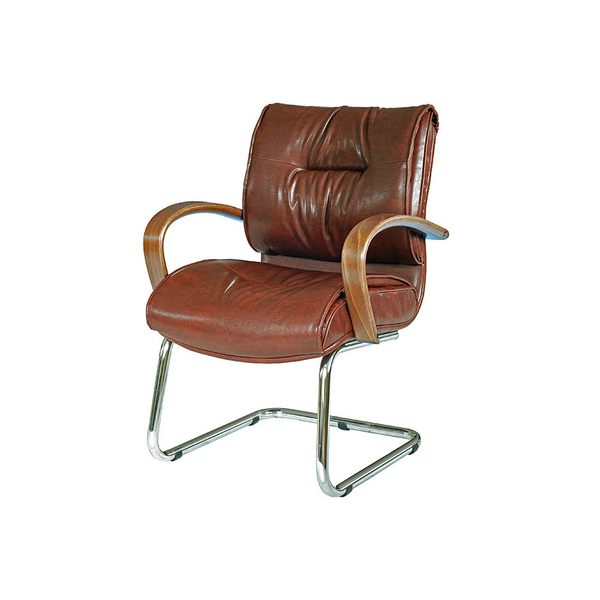
| Armchair | Relieves shoulders and neck, makes standing up easier | Armrests must fit under the tabletop | AURORA, OANA |
| Swivel dining chair | Getting up sideways without moving the chair, small turning movements | No height adjustment | GIULIA, TREPIED, RICO |
| Dining armchair | Very comfortable for long evenings, wide seat | Larger, needs more space at the table | Dining armchairs |
| Wooden chair without upholstery | Robust, easy to clean | Hard when sitting for longer, seat cushion needed | Wooden chairs |
If you also work at the dining table or like to sit for a long time, a cantilever chair or an armchair is usually the right choice. Read more about the individual designs in our guides to dining chairs, kitchen chairs and easy chairs and dining armchairs.
Models from our range compared
The following selection shows dining chairs with different dimensions. All information comes from the product pages (overall height x width x depth x seat height). For all models, you choose the cover yourself: velvet, fabric or genuine leather.
| Model | Type | Dimensions H x W x D | Seat height | Suitable for |
|---|---|---|---|---|
| EVA | Upholstered chair, beech legs | 89 x 49 x 53 cm | 48 cm | Small kitchens, standard tables |
| GINA | Upholstered chair | 94 x 49 x 47 cm | 49 cm | High backrest, compact seat depth |
| PINO B | Upholstered chair, wooden legs | 86 x 49 x 56 cm | 46 cm | Shorter people, lower tables |
| LEO | Upholstered chair, beech | 84 x 59 x 47 cm | 52 cm | Wide seat, higher tables |
| BRAD | Upholstered chair | 81 x 49 x 47 cm | 48 cm | Kitchen and dining area |
| AURORA | Armchair | 84 x 63 x 63 cm | 49 cm | Long evenings, home office |
| OANA | Armchair | 90 x 60 x 63 cm | 50 cm | High backrest with armrest |
| FLEET | Cantilever chair | 87 x 57 x 63 cm | 52 cm | Dynamic sitting, tall people |
| BADSAAL | Cantilever chair | 85 x 56 x 63 cm | 51 cm | Springy seat, metal frame |
| GIULIA | Swivel chair | 86 x 57 x 60 cm | 52 cm | Getting up sideways, home office |
| RICO | Swivel chair | 84 x 68 x 63 cm | 49 cm | Wide seat shell, kitchen |
| ELIAS | Swivel chair | 90 x 60 x 63 cm | 50 cm | High backrest, swivel |
If you spend a lot of time at the table, you will benefit from the models with a depth of 60 cm or more: they usually have a more pronounced backrest. An overview of all springy models can be found under Cantilever chairs, and all swivel models under Swivel dining chairs.


Home office at the dining table: how to make the space ergonomic
For many people, the dining table is their workplace for a few days a week. This works well if you bear a few things in mind. At 74 to 77 cm, a normal dining table is usually slightly higher than a desk, and the laptop forces your head downwards. Set up the space in this order:
Choose the chair
Take the chair with the best backrest, ideally an armchair, cantilever chair or swivel chair. Sit all the way back so that your lower back is in contact with the backrest.
Compensate for height
If your elbows are well below the edge of the table, a firm seat cushion of 3 to 5 cm helps. If your feet then dangle in the air, place a footrest or a sturdy box under the table.
Raise the screen
The top edge of the screen should be roughly at eye level. A laptop stand or a stack of books plus an external keyboard and mouse prevent a hunched back.
Light and space
Sit side-on to the window so that you are not dazzled by backlight. Clear the workplace after work so that the dining table is a dining table again.
Plan breaks
Even on a good chair: every 30 to 45 minutes, stand up briefly, stretch and fetch a glass of water.
Recognise the limit
If you work at the dining table for more than three or four hours a day, you should consider an office chair. Our office chairs are also available in homely versions with leather and wood.
Cover and upholstery: what is pleasant for sitting a long time?
Besides the dimensions, the cover plays a role in seating comfort. Our dining chairs are available with three types of cover that feel different:
| Cover | Seating feel | Care | Ideal for |
|---|---|---|---|
| Fabric | Breathable, warm, non-slip | Wipe and vacuum regularly | Long work sessions, families without small children |
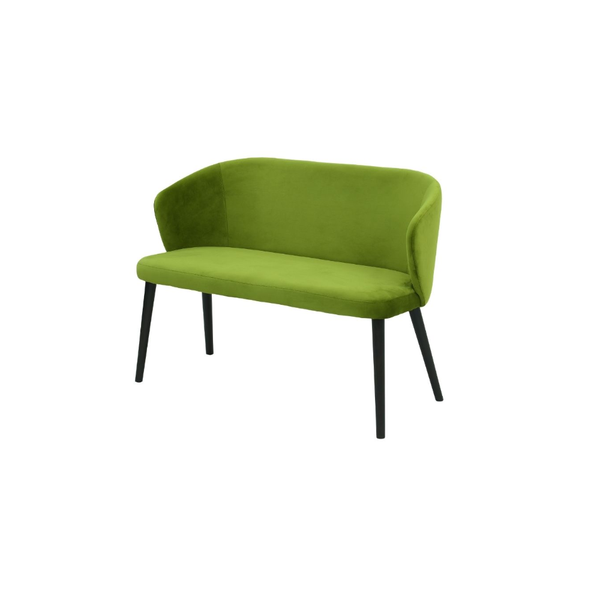
| Velvet | Soft, pleasant, rich in colour | With a soft brush in the direction of the pile | Homely dining areas, dinners |
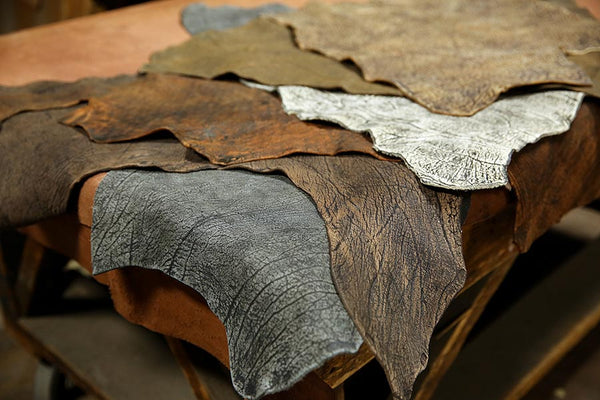
| Genuine leather | Adapts, becomes softer over time | Wipe with a damp cloth, care for occasionally | Families with children, kitchen, home office |
Genuine leather is particularly durable and quick to clean, but can feel warmer in summer. Fabric breathes better. If you are torn between leather and upholstery fabric, our comparison Leather or upholstered chairs will help. How the individual types of leather differ is explained in the article Buffalo, Stelvio and Botswana leather.
Common mistakes when buying
Buying on looks alone
A beautiful chair with a straight backrest and a hard seat becomes uncomfortable by the second course. Try it out or compare the dimensions with your own favourite chair.
Not measuring the table height
If you buy chairs without looking at the table height, you sit too high or too low. With a tape measure, this takes a minute.
Forgetting the armrests
Armchairs are comfortable, but only if they fit under the tabletop or you can live with the distance.
Planning too little space
Allow about 60 cm of table width per person, rather 65 to 70 cm for armchairs and cantilever chairs. Around 80 cm should remain free behind the chair.
How many chairs fit at which table is explained in our article on the right dining table shape. Suitable tables can be found under Dining tables.
Frequently asked questions about ergonomic chairs
What is an ergonomic chair?
A chair whose dimensions and shape suit the body and the table: the feet stand flat, the thighs are well supported, the backrest supports the lower back and the arms reach the tabletop in a relaxed way. Office chairs achieve this through adjustment, dining chairs through the right choice.
What seat height is ideal at the dining table?
There should be about 27 to 30 cm between the seat and the top edge of the table. For a 75 cm high dining table, this corresponds to a seat height of about 45 to 48 cm under load.
Can I work from home permanently at the dining table?
For a few hours a day, yes, with a good chair, a raised screen and an external keyboard. If you work eight hours a day, you should opt for a height-adjustable office chair.
Are cantilever chairs good for the back?
Cantilever chairs give slightly when you sit down and lean back. These small movements relieve the spine and make sitting for a long time more comfortable. For many people, they are the most comfortable form of dining chair.
Is a chair with armrests more ergonomic?
Armrests relieve the shoulders and neck and help when standing up. However, they are only ergonomic if the chair can still get close enough to the table.
What helps if the chair is too low?
A firm seat cushion of 3 to 5 cm. If the chair is too high, a footrest ensures that your feet rest flat and the edge of the seat does not press on your thighs.
Which cover is the most pleasant for sitting a long time?
Fabric is the most breathable, velvet particularly soft, and genuine leather the easiest to care for and the most durable. For our chairs, you can choose between all three.
Find the right chair for your dining table
Browse our dining chairs, cantilever chairs and swivel models, or get advice on dimensions and covers. An overview of all chair types is given in our guide Buying chairs.