
Loose or Firm Upholstery? Seating Feel, Look and Care
Upholstered furniture guide
Loose or firm upholstery: which seating comfort suits you?
The new sofa looks just right in the photo. Three months later, the cover shows ripples, a slight hollow has formed in your favourite spot, and you wonder whether something is broken. Usually it is not: you bought loose upholstery without anyone explaining what that means. This guide shows how loose and firm upholstery differ in chairs, armchairs and sofas, how both feel, how they age and who will be happy with which version.
At the end you will find an upholstery checklist to tick off and print. It first asks about your seating profile and then guides you through a test you can do with your own furniture at home.
The short answer
Loose upholstery
Soft, yielding, the cover lies loosely. You sit "in" the furniture. Ripples and slight creases are part of its character. Ideal for leaning back, lounging and long evenings.
Firm upholstery
Tightly stretched cover, little sinking in. You sit "on" the furniture. The shape stays smooth and precise. Ideal for upright sitting, conversation and getting up easily.
Sling seat
A third way: leather or fabric is stretched freely in the frame and gives slightly when you sit. It looks light and airy, typical of safari and sling chairs.
What does loose upholstery mean?
Loose upholstery refers to a soft upholstery construction in which the cover is deliberately not stretched tightly over the padding. The cover has some extra material so that the padding and suspension can give when you sit down. As a result, you sink in noticeably, and ripples or soft creases form on the seat, back and armrests. These ripples are due to the construction and intentional.
The softness is often found in loose seat and back cushions or in large, continuous upholstered surfaces. Many manufacturers also distinguish extra-loose upholstery: here the surface is so soft that even new furniture shows visible ripples. Anyone looking for a sofa "to sink into" almost always ends up in this category.
The counterpart in common usage is firm or tight upholstery. In between lies a broad range often called "medium firm" in shops. The transitions are fluid, and both types can come together in one piece of furniture, for example a firm seat with loose, soft back cushions.
What is firm upholstery?
With firm, tight upholstery, the cover is stretched tightly over the padding and connected to it in many places, for example by stitching or button tufting. You sink in only a little, the seat stays level and the edges stay sharp. This construction characterises classic period furniture such as the Chesterfield armchair and many dining chairs.
Firm does not mean hard. Good firm upholstery gives when you sit down and springs back; it just doesn't swallow you up. Tight upholstery also settles somewhat over time: the cover and top layer of padding stretch slightly, and the seat firmness decreases a little. This is normal and not a quality problem.
Two things that are often confused
In everyday life, two different properties are lumped together under "soft or firm". If you consider them separately, choosing becomes much easier:
Loose upholstery is usually soft and loosely covered. However, a seat can also be softly padded and yet have a fairly smooth cover, or firm and combined with loose cushions. What provides the suspension inside a seat is explained in the article on Nosag springs and serpentine spring suspension. You will find the upholstery construction of dining chairs in detail in the guide Comfortable dining chairs.
Loose and firm upholstery compared directly
The table summarises what you notice in everyday use. It describes typical properties, not an individual product.
| What to look out for | Loose upholstery | Firm upholstery |
|---|---|---|
| Seating feel | enveloping, you sit "in" the furniture | supportive, you sit "on" the furniture |
| Sinking in | noticeable, the perceived seat height drops | slight, seat height stays almost the same |
| Getting up | takes a little more effort | easy, even without using your hands |
| Posture | leaning back, relaxed, legs up | upright, good for conversation and reading |
| Look when new | soft, often slightly rippled already | smooth, clear edges |
| Look after a while | ripples and seat hollows become more pronounced | slight ripples possible, shape stays calm |
| Care effort | Plump up cushions, smooth the cover | hardly any shape care, cleaning the cover is enough |
| Stylistically suits | Lounge, country house, Japandi, relaxed living spaces | Chesterfield, classic, study, dining room |
How different covers behave on upholstery is a topic in its own right. A comparison of leather, fabric and velvet for chairs can be found in the article Buying an upholstered chair: leather, fabric or velvet?, and for sofas in the comparison Leather or fabric sofa.
Ripples, creases, hollows: defect or normal?
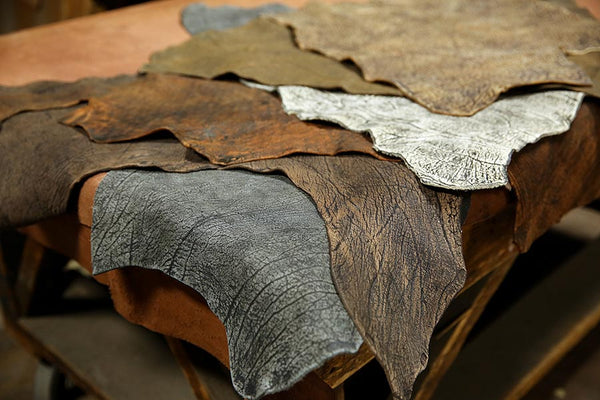
This is the question behind many searches about loose upholstery. The short answer: with loose upholstery, ripples and slight creases in the cover are typical of the product. They occur because leather and fabric stretch somewhat due to body weight, warmth and moisture when sitting, while the padding underneath returns to its shape. The cover then lies more loosely.
The German consumer organisation Stiftung Warentest published an evaluation by the consumer council of the German Institute for Standardization (DIN) on this: of around 500 court expert reports on furniture complaints, the experts assessed 81 per cent of complaints about upholstered furniture as unjustified. Complaints about creases in the cover, hollows in the seat and seat shine on velour failed particularly often, i.e. precisely about the features that are part of the picture with loose upholstery.
Typical and normal
Ripples that can be smoothed out by hand. Slight seat hollows in your favourite spot. Seat firmness that gives a little in the first few weeks. Shiny areas on velvet where the pile has been pressed down.
Contact us
A split in a seam, padding that bottoms out hard at one spot, a frame that creaks or wobbles, or a deformation that does not recover even after plumping up and smoothing.
If you fundamentally dislike ripples, that is no reason to give up comfort. It is a clear signal for tighter upholstery, button tufting or quilting that holds the cover in position.
Soft or firm sofa? Which upholstery suits whom
The right upholstery depends less on taste than on the way you sit. Four everyday scenes show the difference:
Film night
You pull your legs up, lean back, sometimes lie across. This is where loose upholstery with deep, soft cushions plays to its strengths. The perceived seat height can be low.
The long dinner
At the dining table you sit upright, cut, pass things along, get up more often. A firm seat keeps you at the right height for the table. A seat that gives deeply would let you sink down after the second course.
The reading corner
Reading needs back support so that your arms and neck stay relaxed. A medium-firm to firm seat with a backrest reaching up to the shoulders is usually more comfortable than a beanbag feel.
Parents or grandparents visiting
Anyone who no longer likes getting up from deep upholstery will appreciate a firm seat with sturdy armrests. Test getting up without using your hands: it says more than any firmness rating.
Two dimensions play a part here. The seat height: with soft upholstery you sink lower, so the measured value is higher than the perceived one. And the seat depth: a deep and at the same time soft seat can literally swallow smaller people, while taller people often feel comfortable in it. If you suffer from back problems, you should discuss your choice with your doctor and pay particular attention to lumbar support rather than just a keyword like "firm".
Chair, armchair, sofa: upholstery by type of furniture
Dining chairs: thin padding, big effect
On dining chairs, the padding is much flatter than on a sofa, and genuine loose upholstery is rare here. The difference is made by shape, cover and finish of the surface: diamond quilting or vertical channel quilting holds the cover in position and keeps the surface looking orderly even after years. On a smoothly covered seat, a slight seat hollow is more noticeable. On our product pages for dining chairs you will find the cover, frame and dimensions such as seat height and width; they generally do not state a firmness rating. Ask us before ordering if you need to know.

Diamond pattern, seat height 49 cm

quilted, beech frame

quilted skid-base chair

thick padding, frame gives slightly
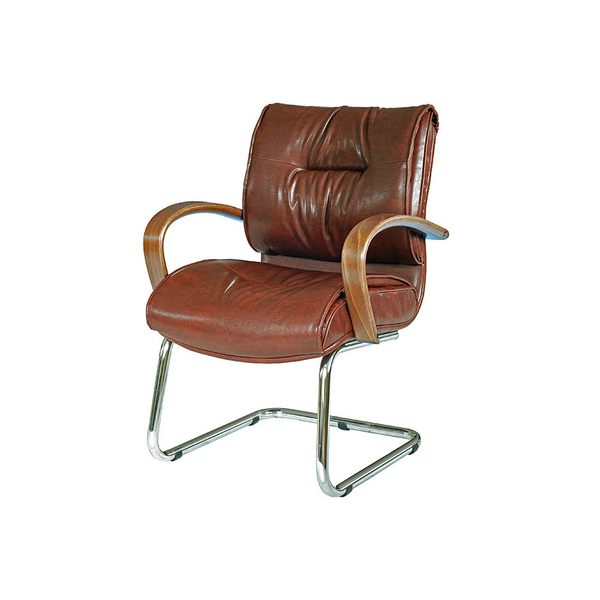
The cantilever chair is a special case. For the POV cantilever chair, the product page describes thick padding, and the cantilever frame gives slightly when you sit down. Part of the comfort here therefore comes from the frame, not just from the padding. More on this in the guide Cantilever chairs.
Armchairs: the widest range
With armchairs, the range extends from the tightly upholstered Chesterfield wingback chair to the cushion armchair you sink into like a floor chair. Many people also call them fauteuils; it is the same piece of furniture. Here the decision between firm and loose matters most, because you sit in an armchair for a long time. Basics on types and dimensions can be found in the guide Reading chairs and armchairs.
Sofas: often mixed
Many sofas combine a medium-firm seat with loose, softer back cushions. This is not a contradiction: the seat supports, while the back cushions can be adjusted. How to choose size and shape is explained in the sofa guide; the classically tight counterpart is shown in the article Chesterfield sofa.
Real models, sorted by seating comfort
Many of our armchairs and sofas have information about the seating comfort on the product page. The following table quotes this information. The classification in the right-hand column is ours and is for orientation only; it is not a measurement of firmness.
| Model | Type | Seating comfort according to the product page | Direction |
|---|---|---|---|
| ODI | Chesterfield armchair | Tight upholstery, upright posture, wide armrests | firm |
| ESTE | Armchair | Rolled armrests, padded backrest and firm seat cushion | firm |
| DOMENICO | Armchair without armrests | Narrow seat without armrests, straight backrest, firm upholstered seat | firm |
| GYMA F | Chesterfield 1-seater | Wide single seater with firm cushion, armrests in line with the back | firm |
| DAN | Sofa | Well padded and medium firm, with loose back cushions | medium firm |
| MAX | Modular cuddle sofa | Softly upholstered sofa with a deep seat for leaning back and putting your feet up | soft, loose |
| YAN | Semi-circular sofa | Deep, softly upholstered seat along a continuous curve | soft |
| TOR | Cushion armchair | Soft armchair with a deep seat cushion and soft backrest, for sinking into like a floor chair | soft, loose |
| TORE | Fireside armchair | Loose seat cushion and scatter cushion, soft and cosy for long evenings | soft, loose |
| CLEMENTE | Armchair with skid frame | Deep, yielding seat shell with loose fabric cushions for seat and back | soft, loose cushions |
| MARIA | Armchair with wooden frame | Loose cushions for seat and back on an inclined wooden frame | loose cushions |
| VLODI | Armchair | Seat and back freely stretched, gives slightly when sitting | sling |
| ALON | Metal armchair | Stretched seat and back in sling form | sling |
| FARI | Safari chair | Stretched seat and back that give slightly, wide flat armrests | sling |
Rather firm and upright
For studies, fireplace corners and anyone who likes to sit upright. ODI combines tight upholstery with button tufting that additionally holds the cover in shape. DOMENICO is narrow and, at 54 cm wide, also fits in a hallway or bedroom.

tight upholstery, button tufting

firm seat cushion

firm upholstered seat, 54 cm wide

firm cushion, 120 cm wide
Medium firm: the middle ground for everyday use
The DAN sofa is described on the product page as well padded and medium firm, with loose back cushions. A continuous seat cushion on short wooden legs creates a calm, straight line. This combination suits households where people sit upright during the day and lounge in the evening.

Soft and loose: for sinking into
If you want to put your feet up and sink in deeply in the evening, these models are the right direction. MAX is a modular cuddle sofa with plump loose cushions and a matching pouffe. TOR is a single module in cushion form, with its seat close to the floor. TORE and CLEMENTE have loose cushions that you simply plump up.

softly upholstered, deep seat

deep, soft seat in a curve

for sinking into like a floor chair

loose seat cushion and scatter cushion

yielding seat shell, loose cushions

loose cushions, inclined wooden frame
Sling: light in look, gentle in seat
On VLODI, ALON and FARI, the cover is stretched freely in the frame. The seat gives slightly without you sinking into padding. These armchairs look airy and fit well in conservatories, studies or small living rooms where a voluminous upholstered armchair would be too heavy.

freely stretched, gives slightly

Sling form on a metal frame

stretched, wide flat armrests
You can order all the models shown here with velvet, fabric or genuine leather upholstery. An overview of the range can be found in the collections Armchairs, Fauteuils and Sofas.
How upholstery shapes the room
Upholstery is not just a question of comfort. It determines how calm or lively a piece of furniture looks in the room. Imagine a living room with a light oak floor and white walls: a tightly upholstered armchair with button tufting sets a clear, almost graphic accent there. A cushion armchair in sage green with soft creases takes the severity out of the same corner and immediately invites you to sit down.
| Detail | Effect | Goes with |
|---|---|---|
| Button tufting | holds the cover in place at points, deliberate creases between the buttons | Chesterfield, classic, gentleman's study |
| Diamond or channel quilting | structures the surface, holds the cover in strips | Dining room, mid-century, retro |
| Smooth, tight cover | calm, straight-lined, emphasises the silhouette | modern, minimalist rooms |
| Loose cushions with ripples | soft, homely, inviting | Japandi, country house, lounge |
| Sling seat | light, graphic, the frame remains visible | Conservatory, study, small rooms |
Mixing is allowed: a medium-firm sofa with a sling armchair next to it makes a balanced seating group. Just make sure that the wood or metal colours of the frames go together so that the combination stays calm.
Leather, velvet or fabric on soft and firm upholstery
The cover changes how upholstery looks and ages. Three rules of thumb:
- Genuine leather stretches when you sit and tends to form large, soft ripples on soft upholstery. On tight upholstery with button tufting, it shows the shape particularly vividly.
- Velvet emphasises every movement of the padding through light and shadow. On soft cushions it creates a lively look, and pressure and warmth can cause seat shine. Care for velvet with a soft brush in the direction of the pile.
- Fabric looks matt and calm. Creases are less noticeable than on velvet, and the texture of the weave remains visible.
The materials we use are described on our material pages for products with wooden legs, products with metal legs and products with a unique design. There are in-depth guides on fabric-upholstered chairs and velvet chairs.
Care: how to keep any upholstery in shape
Shape care is simple for both types of upholstery; only the frequency differs.
| Function | Loose upholstery | Firm upholstery |
|---|---|---|
| Plump up and pat cushions | regularly, pat loose cushions outwards | rarely necessary |
| Smooth the cover | after sitting, with a flat hand | as needed |
| Change seats | important, otherwise a favourite spot develops | helpful for even settling |
| Swap loose cushions | regularly, where identical | usually not applicable |
| Clean the cover | according to the product information: wipe leather and smooth covers with a slightly damp cloth, brush velvet in the direction of the pile, vacuum fabric as needed | |
Every new upholstery settles in during the first few weeks. Deliberately change seats during this time so that the padding gives evenly.
Printable upholstery checklist
First answer five questions about your seating profile. Below them, your tendency appears with suitable models. Then tick off the test you can do with your own furniture at home. You can add a note to each point. Your entries remain saved in this browser until you reset. When printing or saving as a PDF, you get a clean sheet with your notes.
Your tendency
Answer the questions above and your recommendation will appear here.
0 of 0 points done
Preparing at home
The 10-minute sitting test
Look and cover
Before ordering
Terms when searching
The terms relating to upholstery are the same everywhere: loose, tight or firm upholstery, seat firmness, suspension. The differences lie in the names of the furniture itself: an upholstered single seat is called an armchair or fauteuil, and couch and sofa are used interchangeably. When comparing online, it is therefore best to search using both words.
Made to your order
At derStuhl you buy premium furniture directly from the manufacturer. We connect production and end customers without intermediaries. Every armchair and every sofa is only made after you order, with the cover you choose, and carefully crafted by hand. We use only premium materials for covers and finishes. If you would like to know how a particular model feels before ordering, just ask us.
Frequently asked questions about upholstery
What does loose upholstery mean?
A soft upholstery construction with a loosely fitting cover. You sink in noticeably, and deliberate ripples and soft creases form on the seat, back and armrests.
Are ripples a defect with loose upholstery?
As a rule, no. Ripples that can be smoothed out and slight seat hollows are considered typical of loose upholstery. It is different with split seams, padding that bottoms out or deformations that remain. In that case, contact us.
Which is better, soft or firm upholstery?
Neither is fundamentally better. Firm upholstery suits upright sitting, dining rooms and getting up easily. Soft, loose upholstery suits leaning back and lounging. For many households, a medium-firm solution with loose back cushions is a good compromise.
Does firm upholstery become softer over time?
Somewhat, yes. Every upholstery settles in, because the cover and top layer of padding stretch slightly. Change seats in the first few weeks so that this happens evenly.
Which upholstery is more comfortable for older people?
Usually a firm seat with sturdy armrests and a seat that is not too deep, because getting up is easier. Do the "getting up without hands" test from our checklist.
Are Nosag springs the same as firm upholstery?
No. Nosag springs are a suspension of serpentine springs beneath the padding. Whether a piece of furniture feels loose or firm is determined by the padding layers and the tension of the cover above. More on this in the article on Nosag springs.
How do I test the seating comfort when ordering online?
Read the "seating comfort" information on the product page and compare it with your existing sofa or armchair. The checklist above guides you step by step through this comparison. If you have any questions, we will advise you before you order.
Find your seating comfort
Compare armchairs and sofas with firm, medium-firm and soft upholstery directly on the product.