
Ergonomic Office Chair: What to Look for in Your Home Office
Ergonomic office chair: what to look for in your home office
An office chair is the piece of furniture on which many people spend more hours than in their own bed. Nevertheless, it is often bought on looks or price, and only after a few weeks do you notice that the seat is too deep, the armrests do not fit under the tabletop or your lower back hurts after the third video call. An ergonomic office chair, on the other hand, can be adapted to your body and allows movement while sitting instead of forcing you into a rigid posture.
In this guide we show how to recognise a good office chair for the home office: which seat height suits your body height, how seat depth, backrest and armrests are adjusted, which castors suit parquet or carpet, and what an office chair can look like that does not look out of place in the living room. As examples we name real models from our range with the dimensions stated on the product pages.
The key points in brief
- Seat height: your feet stand flat on the floor and the angle between thigh and lower leg is about 90 to 110 degrees. The adjustment range of the gas lift must suit your body height.
- Seat depth: two to four finger widths of space remain between the front edge of the seat and the back of your knee when you sit all the way back against the backrest.
- Backrest: it should reach at least to the shoulder blades and support the lower back at belt height.
- Armrests: the forearms rest loosely, the shoulders stay relaxed, and the chair can still be pushed close to the table.
- Castors and base: a five-star base is stable. Soft, rubberised castors are better for parquet and tiles, hard castors for carpet.
- Cover: fabric is breathable, genuine leather easy to care for and durable, and velvet brings colour into the study. For many of our office chairs you choose the cover yourself.
What makes an office chair ergonomic?
Ergonomic does not automatically mean expensive or packed with levers. What matters is that the chair suits your body and your desk, supports your back without holding it rigid, and allows changes of posture. Healthy sitting is dynamic sitting: sometimes you sit upright and type, sometimes you lean back on the phone, sometimes you slide forward to note something down. A good office chair accompanies these changes.
Adjustable
Seat height and, depending on the model, backrest, armrests and tilt can be adjusted to your body dimensions. The more people use the chair, the more important this becomes.
Supportive
The backrest follows the natural S-shape of the spine and gives support in the lumbar area. A slight curve at belt height prevents the pelvis from tilting backwards.
Mobile
A tilt or synchro mechanism lets the seat and backrest move with you when you lean back. This changes the load and the intervertebral discs are better supplied.
Important for expectations: even the best chair does not replace breaks. Occupational health experts recommend standing up briefly every 30 to 45 minutes. The chair ensures that the time in between remains as relaxed as possible.
The right seat height for your body height
Seat height is the most important value. If the chair is too low, the pelvis tilts backwards and the lower back rounds. If it is too high, your feet dangle in the air and the edge of the seat presses on your thighs. The following table shows guideline values for a desk 72 to 75 cm high, with suitable models whose adjustment range covers the value.
| Body height | Guideline seat height | Suitable models (seat height according to product page) |
|---|---|---|
| 150–160 cm | 40–44 cm | Plan a footrest; BETA O (44–52 cm), MAGIC O (43–51 cm) |
| 160–170 cm | 42–47 cm | CROCO (44–52 cm), ACTIVE P (45–54 cm), BOSS P (44–55 cm) |
| 170–180 cm | 45–49 cm | MARVEY (47–54 cm), DONALD P (47–58 cm) |
| 180–190 cm | 47–52 cm | GOLD P (48–62 cm), KEO P (48–61 cm) |
| over 190 cm | 50–55 cm | OVO P (51–61 cm), GOLD P (48–62 cm) |
Adjusting seat depth, backrest and armrests correctly
After the height come the finer points. Always follow the same order when adjusting, because each step affects the next.
1. Check the seat depth
Sit all the way back until your pelvis touches the backrest. Two to four fingers should fit between the seat edge and the back of your knee. If the seat is too deep, you slide forward and lose contact with the backrest. If it is too short, only half of your thighs are supported.
2. Backrest and lumbar support
The deepest curve of the backrest belongs at belt height. The upper pelvic area is in constant contact with the backrest. With high backrests with a headrest, it is enough if you can lean back comfortably.
3. Armrests
With relaxed shoulders, the upper arm and forearm should form roughly a right angle, with the elbows resting loosely. Armrests that are too high push the shoulders up; armrests that are too low make you slump sideways.
4. Mechanism tension
If the chair has a tilt function, adjust the resistance so that the backrest gives good support when upright and yields gently when you lean back. Heavier people need more counter-pressure, lighter people less.
Which adjustments a particular model offers is stated on the respective product page. All our office chairs with castors are height-adjustable. If a particular function is important to you, such as a particularly high backrest or wide seat, compare the dimensions in the table below or ask us before buying.
Office chairs compared: models from our range
The following office chairs show how different office chairs can be in size and character. All dimensions come from the product pages (overall height x width x depth x seat height).
| Model | Overall height | Width / depth | Seat height | Particularly suitable for |
|---|---|---|---|---|
| MARVEY | 114–121 cm | 66 / 48 cm | 47–54 cm | Entry level, people of average height |
| BETA O | 101–111 cm | 64 / 49 cm | 44–54 cm | Small work corners, budget-conscious purchase |
| Offnet GH | 101–111 cm | 64 / 49 cm | 44–54 cm | Mesh back, for those who sweat easily |
| DONALD P | 117–128 cm | 65 / 50 cm | 47–58 cm | Long working days, high backrest |
| GOLD P | 116–130 cm | 62 / 47 cm | 48–62 cm | Large adjustment range, tall people |
| ACTIVE P | 115–124 cm | 66 / 51 cm | 45–54 cm | Deeper seat, long thighs |
| BOSS P | 128–139 cm | 72 / 47 cm | 44–55 cm | Executive chair, broad build |
| OVO P | 117–127 cm | 62 / 48 cm | 51–61 cm | People over 1.90 m, high desks |
If you are often on the phone or read leaning back in between, you will benefit from a high backrest as on DONALD P, GOLD P or BOSS P. If, on the other hand, you mainly work with concentration at the screen and have little space, a more compact model such as BETA O will serve you well. All office chairs can be found in the Office chairs collection, and a selection focused on adjustability under Ergonomic office chairs.


An office chair in the living space: when the home office is in the living room
Not everyone has their own study. If the desk is in the living room, the bedroom or a niche in the hallway, the office chair should not look like it belongs in an open-plan office. Here it is worth paying attention to material and shape:
Low backrest, homely shape
Models such as ALEX (overall height 86–94 cm) or CROCO (74–82 cm) look more like an armchair than an executive chair and visually disappear behind the desk.
Genuine leather or velvet
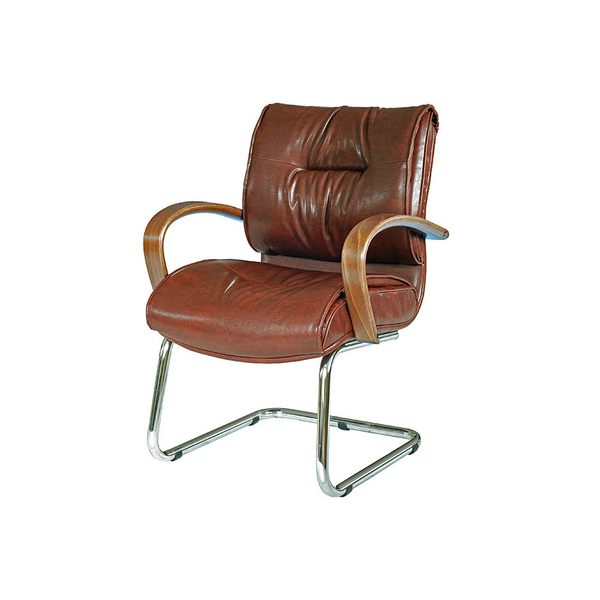
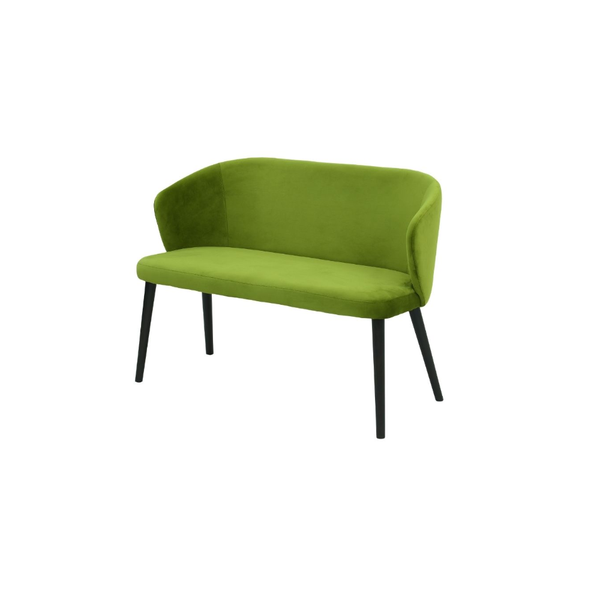
A cover in cognac leather or velvety green suits wooden floors and sofas. For our office chairs, you choose velvet, fabric or genuine leather directly on the product page.
Wooden details
Armrests or frame parts made of wood, as on BOSS P or ALEX, connect the office chair with the dining table, shelving and parquet.
One compromise remains: the homelier and lower the chair, the less it supports the upper back when you lean back. For four to six hours of screen work a day, a model with a higher backrest is the healthier choice. If you only work at the dining table occasionally, the guide Ergonomic chair for the dining table and home office has tips on how a good dining chair can also become a workplace.
Cover, upholstery and castors: details that count in everyday life
| Feature | Advantages | What to look out for |
|---|---|---|
| Fabric cover | Breathable, warm in winter, wide choice of colours | With pets, look for a dense, robust weave |
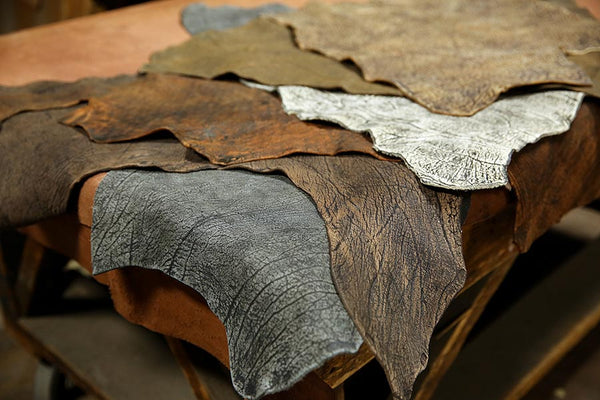
| Genuine leather | Very durable, easy to wipe, develops a patina | Warmer at first in summer, care for it occasionally |
| Velvet | Elegant look, intense colours, soft feel | Shows pressure marks, care for it gently with a brush |
| Mesh back | Airy, good on long summer days | Choose an upholstered seat, vacuum the mesh regularly |
| Soft castors | Protect parquet, laminate and tiles | Roll less easily on carpet |
| Hard castors | Run easily on carpet | Use a floor protection mat on hard floors |
Read more about the differences between cover materials in our guide Leather or upholstered chairs. For genuine leather, it is also worth looking at The difference between buffalo, Stelvio and Botswana leather.
Matching desk and office chair
An ergonomic office chair is only effective at the right desk. Classic desks are 72 to 75 cm high, dining tables usually 74 to 76 cm. There should be at least 5 to 10 cm of space between your thighs and the underside of the desk, otherwise your knees bump or you have to lower the chair too far. Also check the armrest height: if it is higher than the desk apron, the chair cannot be pushed close enough and you work with your arms stretched out.
- Screen: the top edge is at eye level or slightly below, and the distance is about an arm's length.
- Keyboard and mouse: lie directly in front of you, with your forearms resting on the desk or armrest.
- Light: window to the side of the screen, not behind you or directly behind it.
- Movement: take phone calls standing up, and deliberately place the printer or water bottle a little further away.
Suitable work tables can be found under Office desks. An overview of all table types is given in our guide Buying a dining table: shapes, dimensions and materials.
Special cases: visitor chair, children's desk chair and executive chair
Besides the classic swivel chair, there are versions for special tasks. A visitor chair without castors, such as THINK V (seat height 49 cm), stands stably in front of the desk or at the meeting table and visually matches the corresponding swivel chair series. For schoolchildren doing homework at their own desk, a smaller chair such as NIZZIE, 40 cm wide with a seat height of 44–52 cm, makes more sense than an adult model. If you are looking for presence and plenty of seat area, choose an executive chair: at 72 cm, BOSS P offers the greatest width among the models presented here.
The line between this and a designer or dining chair is fluid. If you are looking for a chair that is above all beautiful and only used briefly, you will find inspiration in the guide Designer chairs. An overview of all chair types is provided by Buying chairs: the overview.
Frequently asked questions about ergonomic office chairs
What should you look for when choosing an ergonomic office chair?
For a height-adjustable office chair with an upholstered seat and a stable base, you should look above all at the dimensions. Ergonomic office chairs and executive chairs with wooden details can be found in our range under Office chairs. What matters is that the dimensions suit you.
What seat height do I need at a body height of 1.80 m?
As a guideline, 47 to 50 cm. The chair's adjustment range should cover this value in the middle, so that you still have leeway with different shoes or a different desk height, for example 47–58 cm as with DONALD P.
Is an office chair better with or without armrests?
Armrests relieve the shoulders and neck when they are correctly adjusted. If you often stand up or sit at a low desk, you may find models without armrests or with short armrests more practical. In any case, check whether the armrest fits under the desktop.
Can I use a normal dining chair in the home office?
For one to two hours a day this works well, provided the seat height and backrest are right. For regular screen work, a height-adjustable office chair is better, because you can adapt the seat height exactly to the desk and your body.
Which castors are suitable for parquet?
Soft, rubberised castors protect parquet, laminate and tiles. Hard plastic castors are intended for carpet. Alternatively, a transparent floor protection mat protects the floor.
Leather or fabric for an office chair?
Genuine leather is very durable and easy to clean; fabric is more breathable and feels cooler in summer. For many of our models you choose velvet, fabric or genuine leather on the product page.
How long does a good office chair last?
With daily use, eight to ten years is realistic. Wearing parts such as castors or the gas lift can usually be replaced if they are standard sizes. Genuine leather covers often age more beautifully than faux leather.
Conclusion: the right office chair in three steps
First determine the seat height range that suits your body height and desk. Then check seat depth, backrest height and armrests, and finally choose the cover and look that suit your room. This turns an office chair into a workplace where you are still happy to sit after eight hours.
Browse our office chairs, compare the ergonomic office chairs or discover the matching office desks.