
Wooden bar stools: wood types, shapes and models compared
Bar stool guide
Wooden bar stools: wood types, shapes and models compared
The kitchen island is in place, the worktop shines, only the space in front is still empty. And that is precisely where it is decided whether you like to drink a morning coffee at the counter or would rather stand. A wooden bar stool brings warmth to a place otherwise dominated by stone, glass and stainless steel. The choice is wide: beech or oak, light or dark legs, upholstery or weaving, with a backrest or without.
This guide sorts the questions that shop categories usually leave open. You will learn which woods and finishes there are, when a backrest is worthwhile, which seat suits which kitchen, and how to care for wooden bar stools. At its centre is a size comparison of ten models from our wooden bar stools collection, with all values taken directly from the product data.
The key points at a glance
- Wood type: On ARTIX, RIGA and OSLO the product pages name beech. On the other models it says “wood” without naming the species. Beech is hard, fine-pored and evenly grained; oak, with its stronger grain, looks more rustic.
- Colour: For wooden legs, our page Colours for wooden legs offers tones from Natural and White through Walnut, Cherry and Colonial to Wenge, Mocha and Black.
- Backrest: Seven of the ten models have a backrest; ANTONIO also has armrests. MERI, ARTIX and STRAT are stools without a backrest.
- Seat: Nine models are upholstered, with a cover in velvet, fabric or genuine leather. STRAT has a woven seat of thick black straps.
- Height: Most models are available with a seat height of 65 or 75 cm. Which height suits your counter is explained in detail in our bar stool guide. Here the subject is the wood.
Wooden bar stools compared by size: ten models, real product data
Width, depth and overall height only show side by side how different wooden bar stools are. Between the slim ARTIX with a 37 cm seat diameter and the wide OLE at 58 cm there are 21 cm. For four stools side by side that adds up to 84 cm, more than the width of another stool. Filter by backrest, seat and wood, choose your counter height and compare up to three models directly.
Tap a row or a bar to highlight a model. With the box on the left you can place up to three models side by side.
| Comp. | Photo | Backrest | Seat | Wood | Footrest | suits | ||||
|---|---|---|---|---|---|---|---|---|---|---|
 |
OLE Cognac | yes | Upholstery | Wood | 65 / 75 cm | 98 / 108 cm | 58 × 58 cm | n/a | Island 88–92 Bar 100–115 | |
 |
OLE olive green | yes | Upholstery | Wood | 65 / 75 cm | 98 / 108 cm | 58 × 58 cm | n/a | Island 88–92 Bar 100–115 | |
 |
MERI | no | Upholstery | Wood | 65 / 75 cm | 81 cm* | 40 × 40 cm | n/a | Island 88–92 Bar 100–115 | |
 |
TOLE | yes | Upholstery | Wood (in wood colours) | 65 / 75 cm | 92 / 102 cm | 50 × 52 cm | n/a | Island 88–92 Bar 100–115 | |
 |
DEXA | yes | Upholstery | Wood | 65 / 75 cm | 96 / 105 cm | 58 × 57 cm | n/a | Island 88–92 Bar 100–115 | |
 |
STRAT | no | Weaving | Wood | 75 cm | 77 cm | 48 × 48 cm | n/a | Bar 100–115 | |
 |
ANTONIO | yes | Upholstery | Wood | 65 / 75 cm | 107 / 117 cm | 58 × 47 cm | n/a | Island 88–92 Bar 100–115 | |
 |
OSLO | yes | Upholstery | Beech wood | 62 cm | 92 cm | 45 × 41 cm | n/a | Island 88–92 | |
 |
RIGA | yes | Upholstery | Beech | 65 / 75 cm | 101 / 111 cm | 40 × 39 cm (seat depth) | n/a | Island 88–92 Bar 100–115 | |
 |
ARTIX | no | Upholstery | Beech wood | 65 / 75 cm | 65 / 75 cm | Ø 37 cm | n/a | Island 88–92 Bar 100–115 |
All values come from the product descriptions (as of 23 November 2026). “n/a”: the product page does not give a value. For the footrest, the product photos show crossbars or a foot ring; no height is stated. * MERI: the product page names an overall height of 81 cm with no link to the seat height. For RIGA the seat depth is given, for ARTIX the seat diameter.
Beech, oak or a walnut tone: which wood is in the bar stool?
On a wooden bar stool the frame works harder than on a dining chair. The legs are longer, the leverage when you sit down is greater, and shoe soles rub against the footrest every day. That is why a hard, well-jointed wood and clean connections matter. The best-known woods differ mainly in grain and look.
| Wood | Grain and look | Effect in the kitchen | Good to know |
|---|---|---|---|
| Beech | fine, even, pores barely visible | calm, light to medium, takes colour evenly | hard and flexible, a classic wood for chair frames; stated for ARTIX, RIGA and OSLO |
| Oak | strong, lively, clear pores and growth rings | natural to rustic, suits country style and Scandi | heavy and hard; more on wood quality in the article Oak wood quality |
| Colour on wood | depending on the tone, the grain stays visible | from white to black, matching fronts or the floor | Names such as walnut or cherry on our colour page describe the tone of the legs |
Oak bar stools: when the search is worthwhile
Anyone looking for an oak bar stool often means the look: a visible grain, warm honey and brown tones, a piece that does not feel out of place next to an oak worktop. You can achieve that impression in two ways. Either you choose a model in oak, or you match the colour of the legs to the wood you already have. A stool with legs in Natural or Tobacco sits harmoniously beside an oiled oak top, even if it is made of beech. Whether a particular model is available in another wood is easiest to check via our contact form, because our furniture is made to order.
Beech bar stools: the underestimated classic
Beech is the wood from which chairs have been made for generations. It is hard, bends and works well, and has a calm surface without coarse pores, in which crumbs settle less easily. Especially at a kitchen counter, where breadcrumbs and coffee splashes are part of everyday life, that is a practical advantage. OSLO shows in the product photos an open beech frame with a wooden backrest, RIGA combines beech legs with quilted upholstery, ARTIX sets a round seat on slim beech legs.


A solid-wood bar stool made from a single piece is, incidentally, rare: legs, rails and stretchers are made from separate parts and joined. What matters for stability are the joints and the crossbars that stiffen the frame. More on woods for chairs in general can be found in the guide Wooden dining chairs.
Wood colours for bar stools: from Natural to Black
The colour of the legs decides whether a bar stool blends into the kitchen or sets an accent. On the page Colours for wooden legs you will find the tones in which we make wooden legs. For TOLE the product description refers explicitly to these wood colours. Which tones are available for your chosen model is shown on the relevant product page.
A simple rule helps with the choice: repeat a tone that already appears in the kitchen. That can be the worktop, the floor or an open shelf. A black wooden bar stool looks calm and elegant at an island with a dark stone top, and like a deliberate contrast in a white high-gloss kitchen. Both work, if they are intended.
For wooden chairs our materials page for products with wooden legs also offers metal protection on the legs in gold, silver or vintage. On bar stools, which often stand on tiles or stone and are pushed across the floor when drawn up, that is worth considering. When you order, ask whether the protection is available for your model.

Wooden bar stools with a backrest or without?
The question sounds like a matter of taste, but it is a matter of use. Anyone who breakfasts at the island, helps with homework or sits with guests in the evening stays longer than ten minutes. Then the backrest supports the back. Anyone who only drinks a quick espresso, or often slides the stools under the top, benefits from a stool without a backrest.
With a backrest: for long evenings
OLE has a wide, curved backrest and, at 58 × 58 cm, the largest overall dimensions in the comparison. DEXA is similarly wide, the backrest looks more open. TOLE is a little more compact at 50 cm, RIGA at 40 cm wide is the slimmest model with a backrest. ANTONIO also has armrests and, at 107 or 117 cm overall height, is the tallest stool.
Without a backrest: for small kitchens
ARTIX and MERI are round stools of 37 and 40 cm that almost disappear completely under the top. STRAT measures 48 × 48 cm and a seat height of 75 cm, suited to bar counters. Stools without a backrest leave the kitchen island looking open, because the eye travels over the seat.


| Situation | Recommendation | Examples |
|---|---|---|
| Breakfast and dinner at the island | Backrest, upholstered seat | OLE, DEXA, TOLE |
| Narrow counter, wooden bar stools for several people | a slim model with or without a backrest | RIGA, ARTIX, MERI |
| Stools should go under the top | without backrest | ARTIX, MERI, STRAT |
| Home bar, bar counter of 100 cm and more | 75 cm seat height, preferably with a backrest | ANTONIO, OLE, STRAT |
| Open-plan kitchen with a view of the living room | a backrest with an upholstered look that matches the sofa | ANTONIO, TOLE |
How many stools fit along your counter, and how much space to allow per person, is set out in the guide Bar stools for the kitchen island. Ideas for a bar at home can be found in the article Setting up a home bar.
Upholstery or weaving: which seat suits your everyday life?
A plain wooden seat is hard and becomes uncomfortable after half an hour. That is why most wooden bar stools combine a wooden frame with upholstery. Nine of the ten models in the comparison have an upholstered seat, for which you choose the cover on the product page between velvet, fabric and genuine leather. STRAT takes a different path: thick black straps form a weave.
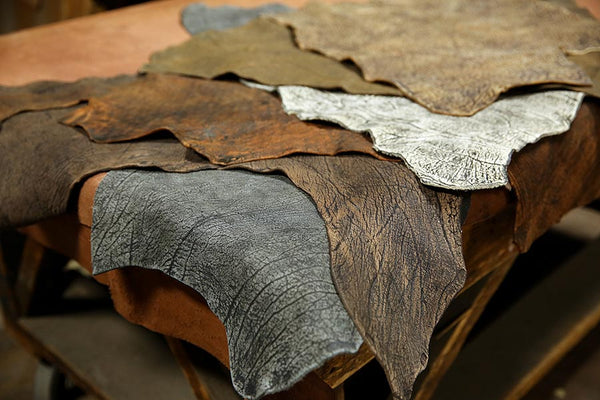
Genuine leather
For wooden legs we use MADRAS leather with a fine grain. Leather is easy to wipe clean. A cognac tone like that on OLE goes with almost any wood.
Velvet
Velvet looks soft and rich in colour. According to the materials page, MATT VELVET has a protective finish on which liquid first stands and is easier to remove. In a kitchen that is a practical detail.
Upholstery fabric
Fabrics such as MOSSA, CREMONA or LARS DAVIS are designed for durability. They feel warm and go well with light woods and open-plan kitchens.
All covers and colours can be seen on the materials page for products with wooden legs. How firm and soft upholstery differ in seating comfort is explained in our article Loose or firm upholstery. The basic question of leather or fabric is covered in the guide Leather or upholstered chairs.

woven seat of black straps

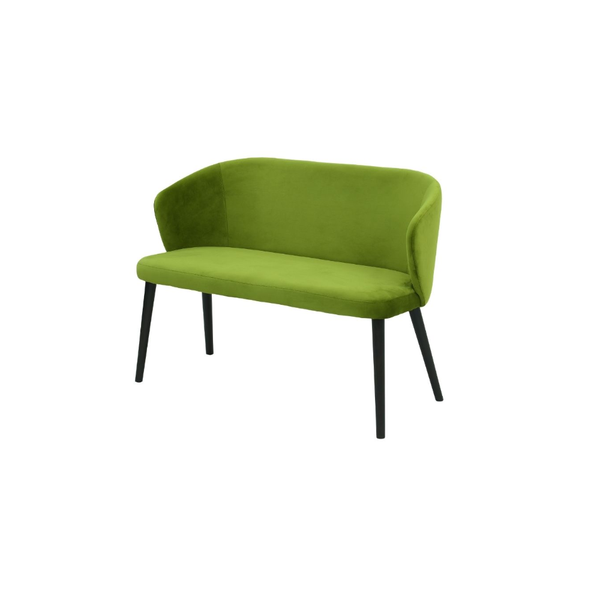
velvet upholstery, olive green

upholstery with an open backrest
Shapes and styles: which wooden bar stool suits your kitchen?
Wood is not just wood. A bar stool with a visible beech frame looks quite different from a Chesterfield stool, on which the wood is only seen on the legs. Four kitchens, four fitting solutions.
Scandinavian kitchen with light fronts
White fronts, oak parquet, plenty of daylight. Here OSLO with its open beech frame or ARTIX with legs in a light wood tone will fit. A cover in sage or green picks up plants on the windowsill.
Country kitchen with a wooden worktop
A solid wood top, panelled fronts, perhaps an open shelf. TOLE in Bordeaux or OLE in cognac on warm wooden legs look here as if they had always stood there.
Modern handleless kitchen
Matt fronts in anthracite, a stone top, clear lines. STRAT with a black strap weave or MERI with a dark frame take up that severity, and the wood adds warmth.
Period building with an open-plan kitchen
High ceilings, stucco, a sofa in view. ANTONIO in the Chesterfield style links kitchen and living room and, with its armrests, brings real sitting comfort to the counter.


If you are planning a small kitchen, the article Furnishing a small kitchen has more ideas for limited space. A rule of thumb for style: at most two wood tones in one room, otherwise the kitchen looks restless. If floor, top and stools show three different woods, choose black or a covering tone for the stools.
Caring for a wooden bar stool: kitchen, footrest and cover
At a kitchen counter a bar stool is more exposed than a chair in the dining room. Splashes, grease, crumbs and shoes on the footrest are part of everyday life. With a few habits the wood stays beautiful for a long time.
- Wipe dry or barely damp: A soft cotton cloth is enough for dust. For stains, only dampen the cloth slightly and then wipe the wood dry. Avoid standing moisture at the foot of the legs, for example after mopping the floor.
- No harsh cleaners: Scouring cream, glass cleaner or alcohol-based sprays attack varnish and oil. A mild washing-up liquid in plenty of water is enough.
- Keep an eye on the footrest: This is where shoes rub every day. Wipe the crossbars regularly so that street dirt does not work into the surface. Dark wood tones show wear less than very light ones.
- Protect the floor: Felt glides or metal protection on the legs prevent scratches on tiles and parquet and spare the ends of the legs.
- Keep a distance from heat: Wood works. Do not place bar stools directly against a radiator or in the full midday sun behind a glass front.
- Care for the cover as appropriate: Wipe leather with a damp cloth and care for it now and then, brush velvet in the direction of the pile, vacuum fabric and dab stains at once instead of rubbing.
Made to order, directly from the manufacturer
All the bar stools in this comparison are made only after you order, with the cover you choose. As a manufacturer we sell directly to end customers, without intermediaries. Each stool is made by hand, with care in the upholstery, seams and wood surface. The production time is 6 to 12 weeks.
For restaurants, cafés and hotels there is no minimum order quantity. Discounts and adapted products are possible. Private and business customers can also pay on invoice. Questions about wood type, colour or a different finish we are happy to answer via the contact form.
Frequently asked questions about wooden bar stools
Is a wooden bar stool stable enough for everyday use?
Yes, if the wood type and joints are right. Hard woods such as beech and oak and a frame with crossbars are made for daily use. We do not state an official maximum load; it depends on the model and the material. For questions about a particular model, our contact form can help.
Beech or oak: which wood is better for bar stools?
Both are hard hardwoods. Beech has a fine, calm surface and takes colour evenly; oak shows a stronger grain and looks more rustic. On ARTIX, RIGA and OSLO the product pages name beech.
Wooden bar stools with a backrest or without?
For meals and longer sitting a backrest is more comfortable, for example on OLE, DEXA or TOLE. Without a backrest, stools such as ARTIX, MERI or STRAT can be pushed under the top, and the kitchen looks more open.
Are there wooden bar stools with an upholstered seat?
Yes. Nine of the ten models in this comparison are upholstered, with a cover in velvet, fabric or genuine leather. STRAT has a woven seat of black straps.
In which colours are the wooden legs available?
The tones are on our Colours for wooden legs page, including Natural, White, Greige, Tobacco, Cherry, Walnut, Colonial, Wenge, Mocha, Grey and Black. Which tones are available for a model is stated on the product page.
What seat height do I need for my counter?
For kitchen islands and worktops of 88 to 92 cm the product pages name a seat height of 65 cm, for bar counters of 100 to 115 cm 75 cm. How to measure correctly is explained in the bar stool guide.
How do I clean a wooden bar stool?
Wipe dry or barely damp with a soft cloth, then rub dry. Do not use harsh cleaners and avoid standing moisture. Wipe the footrest regularly, because shoes rub there.
Find your wooden bar stool
All models with a wooden frame can be found in our wooden bar stools collection. There you choose cover and finish directly on the product page.